Color isn't just decoration on your book cover—it's a psychological trigger that influences reader emotions, purchasing decisions, and genre expectations within milliseconds. Research shows that color increases brand recognition by 80%, and up to 90% of snap judgments about products are based on color alone.
For book covers competing in crowded online marketplaces, color psychology is the difference between a scroll-past and a click-through. The right palette can increase conversion rates by 24% and boost reader engagement by 73%. Yet many authors and publishers choose colors based on personal preference rather than psychological impact.
The Science Behind Color Psychology in Book Covers
Neurological Processing Speed The human brain processes color 60,000 times faster than text. Before readers consciously register your title or author name, their brain has already formed emotional associations based on your cover's color palette.
Emotional Response Triggers Colors trigger immediate emotional responses through both biological programming and cultural conditioning. Red increases heart rate and creates urgency. Blue lowers blood pressure and builds trust. These responses happen before conscious thought.
Genre Recognition Shortcuts Readers use color as a primary genre identification tool. When scanning Amazon results, color helps them instantly categorize books as romance, thriller, fantasy, or literary fiction—often more quickly than reading titles or descriptions.
Purchase Decision Influence Studies show that 85% of consumers cite color as the primary reason they purchase a particular product. For books, where covers are the primary marketing tool, color psychology directly impacts sales performance.
Understanding Individual Color Psychology
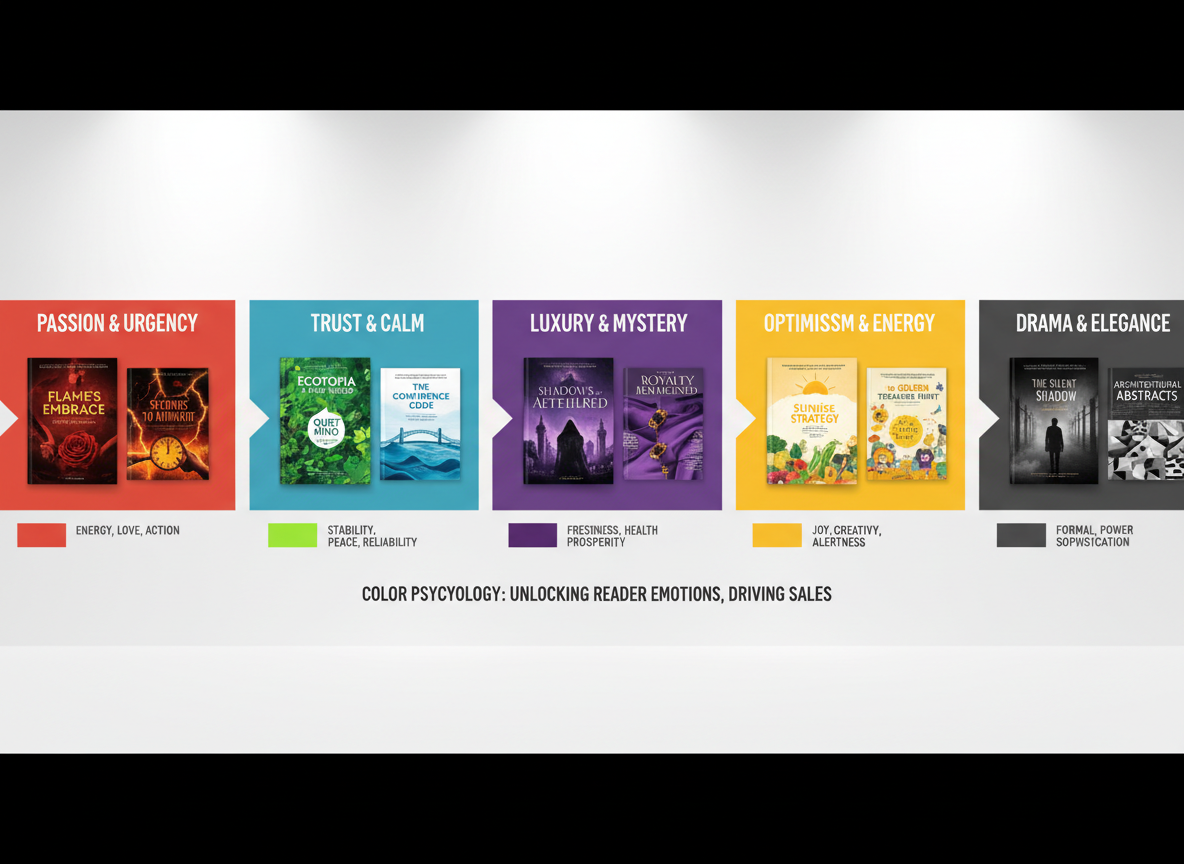
Red: Passion, Urgency, and Intensity
Psychological Impact Red is the most emotionally intense color, triggering immediate physiological responses including increased heart rate and heightened attention. It creates feelings of excitement, passion, danger, and urgency.
Best Genre Applications
- Thrillers and suspense (danger and tension)
- Romance (passion and desire)
- Horror (blood and danger)
- Action and adventure (excitement and energy)
- Erotica (passion and intensity)
Reader Expectations Red signals high-stakes content with emotional intensity. Readers expect fast pacing, strong emotions, and dramatic conflict. Using red for gentle literary fiction creates cognitive dissonance.
Combination Strategies
- Red + black: Maximum drama and sophistication
- Red + white: Clean urgency and medical/clinical themes
- Red + gold: Luxury passion and historical romance
- Dark red: Mature, serious intensity
Blue: Trust, Calm, and Intelligence
Psychological Impact Blue is universally appealing and creates feelings of trust, stability, calm, and intelligence. It lowers blood pressure and creates contemplative moods. Blue is the most popular color globally.
Best Genre Applications
- Literary fiction (intellectual depth)
- Mystery (methodical investigation)
- Science fiction (technology and space)
- Business and self-help (trust and expertise)
- Memoir (reflection and honesty)
Reader Expectations Blue signals thoughtful, intelligent content requiring mental engagement. Readers expect depth, complexity, and emotional control rather than explosive drama.
Combination Strategies
- Navy blue + gold: Premium literary quality
- Light blue + white: Peaceful, hopeful themes
- Blue + silver: Futuristic science fiction
- Blue + brown: Grounded, realistic narratives
Green: Growth, Nature, and Balance
Psychological Impact Green represents growth, renewal, nature, and balance. It's the most restful color for the human eye and creates feelings of harmony, freshness, and environmental connection.
Best Genre Applications
- Environmental fiction (nature themes)
- Personal growth and self-help (transformation)
- Fantasy (magical forests and natural magic)
- Health and wellness (healing and balance)
- Coming-of-age stories (growth and development)
Reader Expectations Green signals transformation, natural themes, or balanced perspectives. Readers expect character growth, environmental elements, or holistic approaches to conflict.
Combination Strategies
- Forest green + gold: Magical realism and fantasy
- Mint green + white: Fresh contemporary themes
- Dark green + black: Dark nature or eco-thriller
- Green + brown: Earthy, grounded narratives
Yellow: Optimism, Energy, and Attention
Psychological Impact Yellow is the most visible color and creates feelings of optimism, happiness, energy, and warmth. It stimulates mental activity and generates muscle energy. However, overuse can create anxiety.
Best Genre Applications
- Uplifting contemporary fiction (hope and happiness)
- Humor and comedy (fun and lightheartedness)
- Children's books (energy and playfulness)
- Self-help and motivation (optimism and possibility)
- Summer beach reads (warmth and relaxation)
Reader Expectations Yellow signals uplifting, energetic content with positive outcomes. Readers expect feel-good stories, humor, or motivational content rather than dark themes.
Combination Strategies
- Yellow + white: Clean optimism and simplicity
- Yellow + black: Bold contemporary design
- Mustard yellow: Vintage or retro aesthetics
- Pale yellow: Gentle, subtle optimism
Purple: Luxury, Mystery, and Spirituality
Psychological Impact Purple combines the stability of blue with the energy of red, creating associations with luxury, wisdom, spirituality, and mystery. It's historically associated with royalty and premium quality.
Best Genre Applications
- Fantasy (magic and mysticism)
- Historical fiction (royalty and nobility)
- Spiritual and metaphysical (consciousness and wisdom)
- Mystery (sophisticated intrigue)
- Romance (luxury and sophistication)
Reader Expectations Purple signals sophisticated, mysterious, or spiritual content. Readers expect depth, complexity, and premium quality rather than straightforward narratives.
Combination Strategies
- Purple + gold: Royal luxury and fantasy
- Purple + silver: Mystical and magical themes
- Deep purple + black: Dark mystery and sophistication
- Lavender + white: Gentle spirituality and romance
Black: Sophistication, Mystery, and Drama
Psychological Impact Black represents sophistication, power, mystery, and elegance. It creates strong contrast and commands attention while suggesting seriousness and authority.
Best Genre Applications
- Thrillers and noir (darkness and mystery)
- Literary fiction (serious, sophisticated themes)
- Horror (fear and unknown)
- Erotica (sophistication and intensity)
- Biography (authority and gravitas)
Reader Expectations Black signals serious, sophisticated, or dark content. Readers expect mature themes, complex narratives, and substantial emotional or intellectual depth.
Combination Strategies
- Black + white: Classic elegance and stark contrast
- Black + red: Dramatic intensity and danger
- Black + gold: Premium luxury and sophistication
- Black + neon: Modern thriller or dystopian
White: Purity, Simplicity, and Space
Psychological Impact White represents purity, simplicity, cleanliness, and new beginnings. It creates breathing room and suggests minimalism, clarity, and fresh starts.
Best Genre Applications
- Literary fiction (minimalist sophistication)
- Memoir (honesty and clarity)
- Contemporary fiction (clean, modern themes)
- Self-help (clarity and fresh perspectives)
- Medical or psychological themes (clinical clarity)
Reader Expectations White signals clean, honest, or minimalist content. Readers expect clarity, simplicity, and often emotional or intellectual depth through restraint.
Combination Strategies
- White + black: Maximum contrast and sophistication
- White + pastels: Gentle, hopeful themes
- White + bold accent: Modern minimalism
- Cream/off-white: Warmth and vintage elegance
Genre-Specific Color Strategies
Mystery and Thriller Color Palettes
Dark and Moody Dominance Mystery and thriller covers overwhelmingly use dark palettes—blacks, deep blues, charcoal grays—to create tension and suggest hidden dangers. These colors trigger vigilance and anticipation.
Accent Color Psychology
- Red accents: Danger, blood, urgency
- Yellow accents: Clues, revelation, warning
- White accents: Stark contrast, revelation, clinical precision
- Blue accents: Cold calculation, methodical investigation
Successful Thriller Palette Examples
- Gillian Flynn's "Gone Girl": Black with bold yellow title creates maximum visibility and warning
- Paula Hawkins' "The Girl on the Train": Dark blue with red accents suggests danger beneath calm surface
- Dan Brown's thrillers: Dark backgrounds with symbolic gold elements create mystery and premium positioning
Romance Color Palettes
Emotional Temperature Coding Romance subgenres use color temperature to signal heat level and emotional tone. Warm colors indicate passion and heat; cool colors suggest emotional depth and slow burn.
Subgenre Color Conventions
- Contemporary romance: Bright, saturated colors (coral, teal, pink)
- Historical romance: Rich jewel tones (burgundy, emerald, sapphire)
- Romantic suspense: Dark with passionate red accents
- Sweet romance: Soft pastels (blush, lavender, mint)
- Erotica: Deep, intense colors (crimson, black, purple)
Color Combination Success Pink and teal combinations dominate contemporary romance, creating instant genre recognition. Historical romance uses burgundy and gold for luxury positioning. Dark romance employs black with red or purple for intensity signaling.
Fantasy and Science Fiction Color Palettes
World-Building Through Color Fantasy and science fiction use color to signal the type of world readers will enter—magical, technological, dystopian, or utopian.
Fantasy Color Strategies
- Epic fantasy: Rich, saturated jewel tones (emerald, sapphire, ruby)
- Urban fantasy: Dark with neon or magical accent colors
- Fairy tale retellings: Jewel tones with gold accents
- Dark fantasy: Black, deep purple, blood red
- Cozy fantasy: Warm, inviting earth tones
Science Fiction Color Strategies
- Space opera: Deep blues, blacks, with metallic accents
- Cyberpunk: Neon colors on dark backgrounds
- Hard sci-fi: Cool, technical blues and grays
- Dystopian: Desaturated, muted tones suggesting bleakness
- Hopeful sci-fi: Bright blues and whites suggesting possibility
Literary Fiction Color Palettes
Sophisticated Restraint Literary fiction typically employs restrained, sophisticated palettes that signal intellectual depth and artistic merit rather than commercial genre positioning.
Common Literary Approaches
- Minimalist white space with single accent color
- Muted, desaturated tones suggesting complexity
- Unexpected color combinations creating intrigue
- Monochromatic schemes emphasizing form over flash
- Vintage or retro palettes suggesting timelessness
Signaling Literary Quality Restraint in color usage signals that content quality supersedes commercial appeal. Literary covers often use one or two colors maximum, with significant white space creating breathing room and sophistication.
Cultural Color Considerations
Western Color Associations
North American and European Conventions
- White: Purity, weddings, cleanliness
- Black: Mourning, sophistication, formality
- Red: Danger, passion, excitement
- Blue: Trust, masculinity, calm
- Pink: Femininity, sweetness, romance
Eastern Color Associations
Asian Market Considerations
- Red: Luck, celebration, prosperity (positive)
- White: Death, mourning (negative in some contexts)
- Gold: Wealth, prosperity, premium quality
- Yellow: Royalty, sacred (in some cultures)
- Green: Growth, harmony, family
Adaptation Strategies For books targeting international markets, research specific cultural color associations. Consider creating regional cover variations for major markets with significantly different color psychology.
Global Color Universals
Cross-Cultural Color Meanings Some color associations transcend cultural boundaries:
- Blue: Generally trusted and liked globally
- Green: Nature and growth across most cultures
- Warm colors: Energy and excitement universally
- Cool colors: Calm and professionalism globally
Creating Effective Color Palettes
The 60-30-10 Rule
Professional Color Balance
- 60% dominant color: Establishes mood and genre
- 30% secondary color: Supports and complements
- 10% accent color: Creates focal points and interest
This ratio creates visual harmony while maintaining interest and hierarchy.
Color Harmony Systems
Complementary Colors Colors opposite on the color wheel (red/green, blue/orange, yellow/purple) create maximum contrast and visual impact. Use for dramatic, attention-grabbing covers.
Analogous Colors Colors adjacent on the color wheel create harmonious, cohesive palettes. Use for sophisticated, unified designs that feel intentional and professional.
Triadic Colors Three colors equally spaced on the color wheel create vibrant, balanced palettes. Use for energetic, complex narratives with multiple elements.
Monochromatic Schemes Variations of a single color create sophisticated, cohesive designs. Use for minimalist literary fiction or when emphasizing form and typography over color variety.
Testing Color Effectiveness
Thumbnail Testing View your color palette at thumbnail size (100x150 pixels). Does it maintain impact? Can you identify the genre? Does it stand out in search results?
Competitive Analysis Screenshot your genre's bestseller list. How does your color palette compare? Does it fit genre expectations while standing out enough to attract attention?
A/B Testing When possible, test different color variations with your target audience. Track which palettes generate more clicks, engagement, and ultimately sales.
Accessibility Considerations Ensure sufficient contrast for readability. Test for color blindness accessibility using online tools. Approximately 8% of men and 0.5% of women have some form of color vision deficiency.
Technical Color Implementation
Color Modes and Specifications
RGB for Digital Use RGB color mode for ebooks and online marketing. Specify exact RGB values to ensure consistency across digital platforms.
CMYK for Print Convert to CMYK for print books. Colors appear differently in print than on screen—always request physical proofs before final printing.
Color Profiles Use sRGB for web and Adobe RGB or ProPhoto RGB for print preparation. Proper color profile management ensures colors reproduce as intended.
Platform-Specific Optimization
Amazon Kindle Colors appear differently on various Kindle devices. Test on both e-ink and color tablet displays. High contrast works best for e-ink devices.
Apple Books Apple devices generally display colors vibrantly and accurately. Take advantage of this with rich, saturated palettes that showcase color psychology.
Print-on-Demand POD services vary in color accuracy. Order proofs from your specific printer and adjust color specifications based on actual output.
Common Color Psychology Mistakes
Personal Preference Over Psychology Choosing colors you personally like rather than colors that trigger appropriate psychological responses in your target readers reduces effectiveness.
Ignoring Genre Conventions While standing out is important, completely ignoring genre color conventions confuses readers and reduces discoverability.
Too Many Colors Using more than three main colors creates visual chaos and dilutes psychological impact. Restraint creates stronger emotional responses.
Insufficient Contrast Low contrast between elements reduces readability and impact, especially at thumbnail size where most purchasing decisions occur.
Cultural Insensitivity Using colors with negative cultural associations in your target market can alienate readers and reduce sales.
Measuring Color Psychology Success
Sales Performance Tracking Compare sales before and after color optimization. Track conversion rates from impressions to clicks to purchases.
A/B Testing Results Test different color palettes with identical designs otherwise. Measure which generates more engagement and sales.
Reader Feedback Analysis Monitor reviews and feedback mentioning cover appeal. Ask beta readers specifically about color impact and emotional response.
Competitive Positioning Track your visibility in genre searches. Does your color palette help you stand out while fitting genre expectations?
Ready to create book covers that leverage color psychology for maximum sales impact? Our brand identity servicescombine psychological research with design expertise to develop color palettes that trigger the right emotional responses in your target readers. We analyze your genre, audience, and positioning to create covers that don't just look beautiful—they sell books.
See examples of our strategic color psychology implementation across various genres in our portfolio, where we showcase how the right color choices have helped authors increase visibility, build brand recognition, and drive measurable sales growth.
Color psychology isn't about following rigid rules—it's about understanding how colors influence reader emotions and purchasing decisions, then strategically applying that knowledge to your specific book and audience. The most effective book covers use color as a strategic tool that works in harmony with typography, imagery, and composition to create immediate emotional impact and drive sales.
Make 2025 the year your book covers harness the full power of color psychology to attract your ideal readers and convert browsers into buyers.